Material-specific method
We don’t apply a standard recipe; we determine the right technique for each object.

We provide equipment, materials and practices that extend the life of rare works, books, maps and sensitive documents.
Let’s discuss your project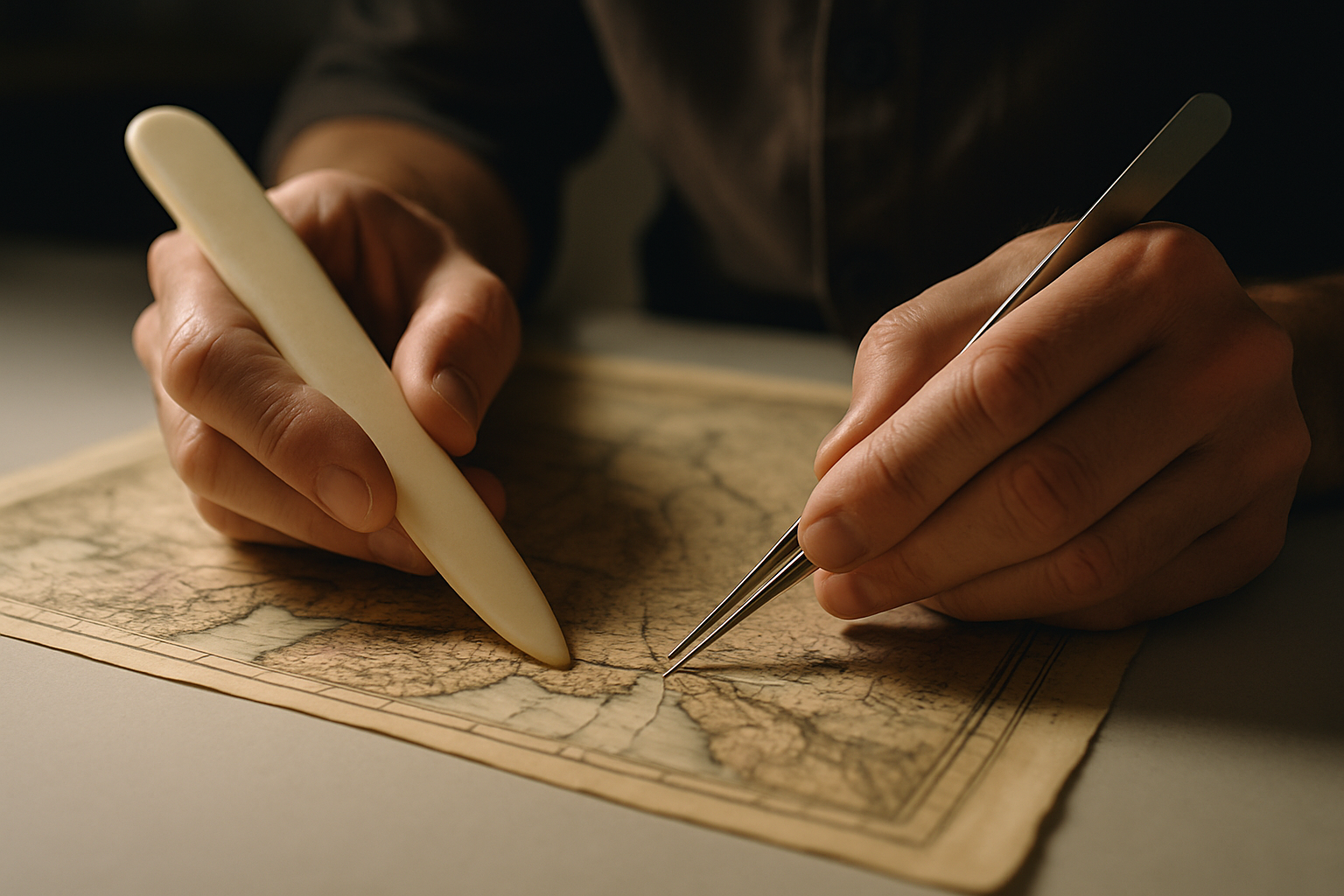
The wrong material or treatment can cause irreversible damage and information loss.
Every material requires a different treatment. By assessing the paper structure, type of damage and conditions of use, we determine the appropriate solution from preventive measures to advanced restoration equipment.
We don’t apply a standard recipe; we determine the right technique for each object.
All the materials and techniques we use are compatible with the object and reversible.
We use brands such as CTS Conservation and Hidakawashi, for which we are the exclusive distributor.
We provide recommendations for storage and periodic inspection after restoration.
An auditable, sustainable scope scaled to your needs.
Every step is documented; scope and quality criteria are agreed at the start of the project.
The material structure, form of damage and environmental risks are assessed.
Reversible materials and techniques compatible with the object are selected.
Equipment installation, consumable selection and operating processes are supported.
Recommendations are provided for storage, environmental conditions and periodic inspections.
Paper documents, books, maps, photographs and similar cultural heritage materials are restored using methods suited to their structure.
No, reversible materials and techniques compatible with the object are used; a condition assessment is carried out before any intervention.
It depends on the material’s size and degree of damage; after the condition assessment, we share a timeline and scope specific to you.
We provide a conservation plan covering suitable storage conditions, environmental control and periodic inspection.
Yes, through application and usage training we help your in-house team learn basic conservation techniques.