Ottoman-script expertise
We can read and analyse riq’ah, naskh, diwani, thuluth, ta’liq and siyakat scripts.

We read, simplify, restore and digitise documents produced in Ottoman scripts such as riq’ah, naskh, diwani, thuluth, ta’liq and siyakat.
Let’s discuss your project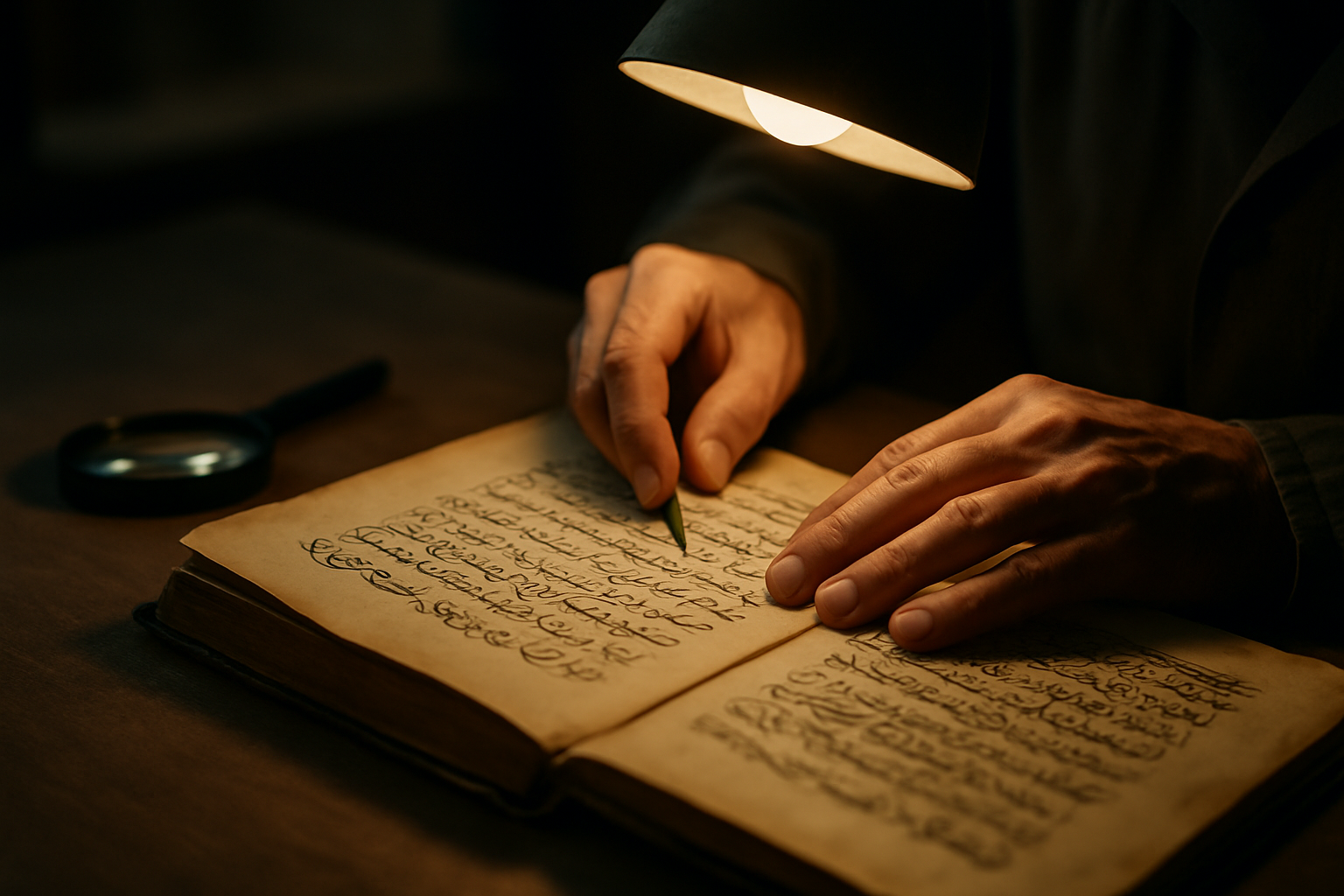
Ottoman manuscripts cannot become part of institutional memory without being correctly read and simplified.
We read books, ledgers, magazines, imperial edicts and warrants produced in various Ottoman scripts — riq’ah, naskh, diwani, thuluth, ta’liq and siyakat — as well as printed materials, transliterate them into the modern alphabet, simplify them into contemporary Turkish, index and summarise them, restore them, and convert them into a digital archive.
We can read and analyse riq’ah, naskh, diwani, thuluth, ta’liq and siyakat scripts.
We make the document understandable while also transferring it permanently to the digital archive.
We have experience working with official historical documents such as imperial edicts and warrants.
Through indexing and summarising, documents become ready for researcher use.
An auditable, sustainable scope scaled to your needs.
Every step is documented; scope and quality criteria are agreed at the start of the project.
Historical documents such as edicts, warrants, ledgers and books are identified.
Our expert team reads the documents and transliterates them into the modern alphabet.
Texts are simplified into contemporary Turkish and indexed.
Documents are preserved and transferred to the digital archive.
We can read and analyse various Ottoman scripts, including riq’ah, naskh, diwani, thuluth, ta’liq and siyakat.
Transliteration is converting the text letter-by-letter into the modern alphabet; simplification is making the text understandable in contemporary Turkish.
Yes, after the reading and simplification process, documents are restored and converted into a digital archive.
Yes, alongside books and ledgers, we also work with official historical documents such as imperial edicts and warrants.
Yes, documents that are read are indexed and summarised so researchers can access them easily.