Paper surface restoration
Applied to a paper surface to prevent damage caused by moisture and mould; does not compromise the legibility of the text underneath.

From paper to leather to wooden sculptures — preserving cultural heritage with Tengu
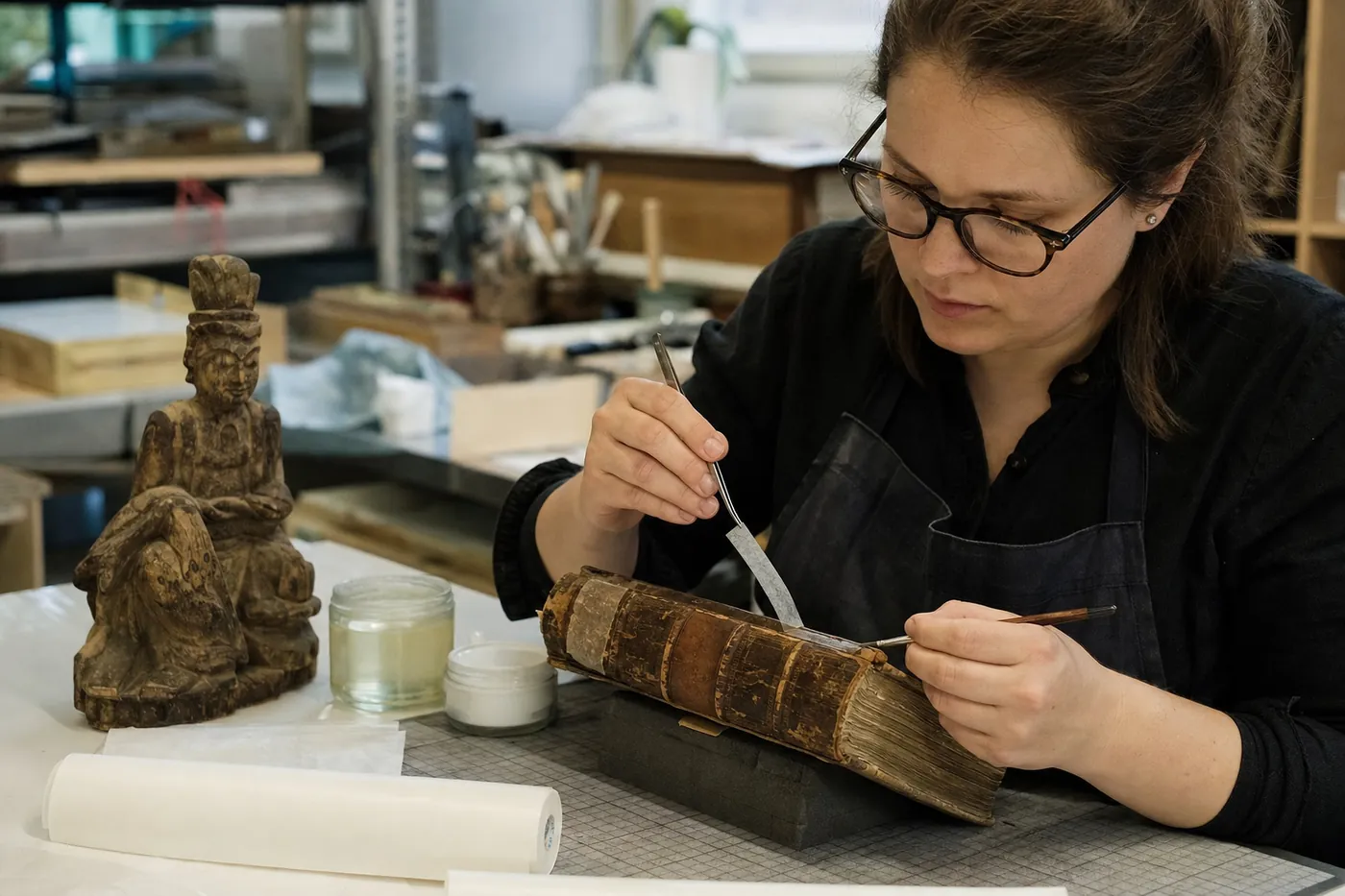
Tengu is a Japanese restoration paper made from 100% kozo fibre that can be applied to a surface to prevent damage caused by moisture and mould, without obscuring the text underneath. Thanks to its thin, durable and flexible structure, it has a wide range of applications in the restoration of paper, leather-bound works and wooden sculptures.
When paper is not stored under suitable conditions, deterioration can occur; mould caused by moisture weakens the paper fibres, and threads or clumps can appear on the surface. Tengu is applied to the surface to prevent further exposure to environmental conditions, and even once applied, the text underneath remains clearly legible. In handmade washi paper, the fine lines of the fibres become visible and limit transparency, whereas machine-made Tengu has a more homogeneous quality, making it better suited to conservation and restoration purposes.
Cracks can form in leather due to acidic gases absorbed from the atmosphere and excessive dryness, eventually turning into a reddish-brown dust. When Tengu is placed over leather-covered materials, it can prevent further deterioration. Thanks to being thin, durable and flexible, it is frequently used in the restoration of leather-bound works, and it also finds broad use in restoring other materials degraded by acidic causes.
It can be applied as a sheet to both sides of a material, compensating for weak areas and repairing tears. Being thin also makes Tengu suitable for restoring double-sided or coloured documents. Tengu, made from 100% kozo fibre, has been shown to retain its flexibility for around a thousand years.
Applied to a paper surface to prevent damage caused by moisture and mould; does not compromise the legibility of the text underneath.
Placed over leather materials cracking from acidic gases and dryness to prevent further deterioration.
Applied to a sculpture's surface against scratches, stains, fading and cracks; colour is added on top when needed.
Tengu is produced using a proprietary chlorine-free bleaching technology; without using chlorine, impurities that degrade the material are removed through repeated water washing.
Scratches and stains are addressed first, then Tengu is applied to the surface against fading and cracks; extra colour is added on top of this layer when needed.
Tengu, made from 100% kozo fibre, has been shown to retain its flexibility for around a thousand years.
In handmade washi paper, the fibre lines become visible and limit transparency, whereas Tengu's more homogeneous quality makes it better suited to conservation and restoration purposes.