
DIGITAL ARCHIVE GUIDE
How to choose a digital archiving company: a 10-question checklist
When choosing a digital archiving company, compare not only price but also references, ISO 27001 information security, on-site scanning capacity, the scanner fleet, quality control and the archive software used after scanning.
A digital archiving project moves an organisation's documents into a system that will be used for years, so the choice of company should not come down to the price per page alone. The 10 questions below help you compare quotes on the same terms.
1. What projects of a similar scale have you completed?
A job of a few thousand pages and an institutional archive of millions of pages require different organisation. Ask the company for completed, verifiable references close to your scale.
2. Do you hold an information security certification?
For documents containing personal data, ISO/IEC 27001 certification for an information security management system is an important assurance. Check that the scope of the certificate includes archiving and digitisation services. Under KVKK (Turkey's Personal Data Protection Law), a confidentiality agreement and staff undertakings should also be added to the contract.
3. Where will the scanning take place?
If you do not want the documents to leave your premises, confirm that the company can bring its team and equipment to you and scan on-site. If the documents will leave, ask about the transport, storage and handover records.
4. Which devices will you scan with?
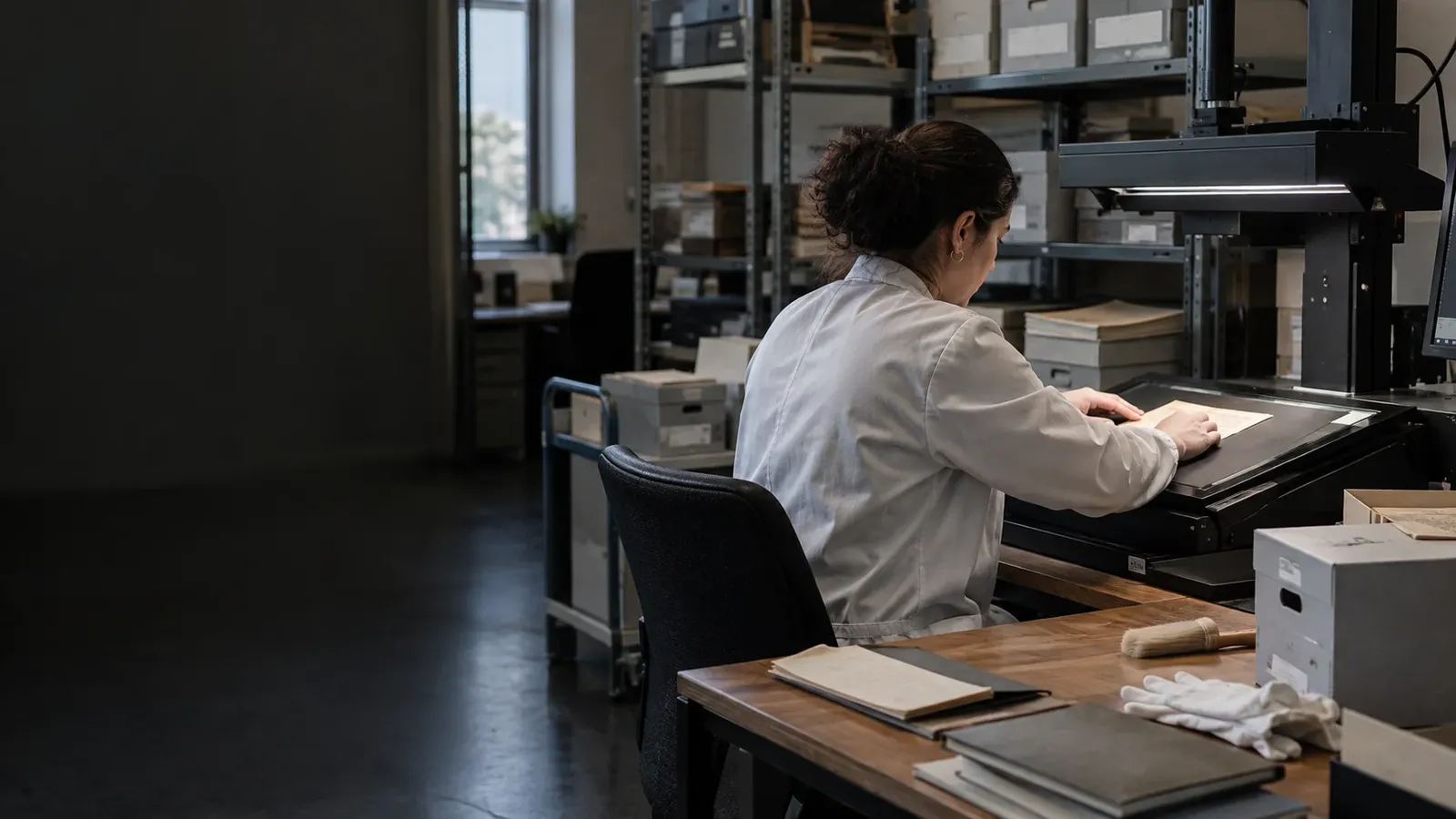
Bound books and historical documents need non-contact book scanners, loose papers need high-speed document scanners, and maps and engineering drawings need wide-format scanners. No single type of device can scan every kind of document correctly.
5. Is pre-scan preparation included in the quote?
Removing staples and paper clips, mending tears, sorting and ordering make up a large part of the work. The quote should state clearly who is responsible for this preparation.
6. What resolution, file format and OCR will you deliver?
The resolution (dpi), colour mode and file format (e.g. PDF/A, TIFF) to be delivered, and whether searchable text will be produced with OCR, should all be set out in writing.
7. Which fields will be used for indexing?
Whether a document can be found later depends on its index fields: file number, date, department, personal name and so on. Agree in advance on the fields and on how data entry accuracy will be measured.
8. How is quality control carried out?
Ask whether missing pages, skewed or illegible images and incorrect indexes are checked by sampling or by full inspection. How faulty records will be corrected should be stated in the contract.
9. Where will the data go after scanning?
Scanned images should be searchable in archive software and shareable with authorised users. Make it clear whether the company has its own digital archive software or will transfer the data to your existing system.
10. What determines the price?
The price depends on the number of pages, the type and size of the documents, their physical condition, preparation work, the number of index fields, OCR, the scanning location and the timeline. Break the quotes down by these items to compare them; a unit price per page on its own can be misleading.
How does Arşivist answer these questions?
Since 1999, Arşivist has completed more than 400 projects at more than 200 organisations. These include sorting, basic repair and digitisation for the Ottoman Archives Department (Osmanlı Arşivleri Daire Başkanlığı), and scanning plus the installation of a document archive management system at Isparta Municipality (our references). Our information security management system is certified to ISO/IEC 27001:2022 (our certificates). Scanning can be done on-site, using Canon, Fujitsu and Kodak document scanners as well as book and wide-format scanners. For details, see our digital archiving service page or request a quote.
Related posts
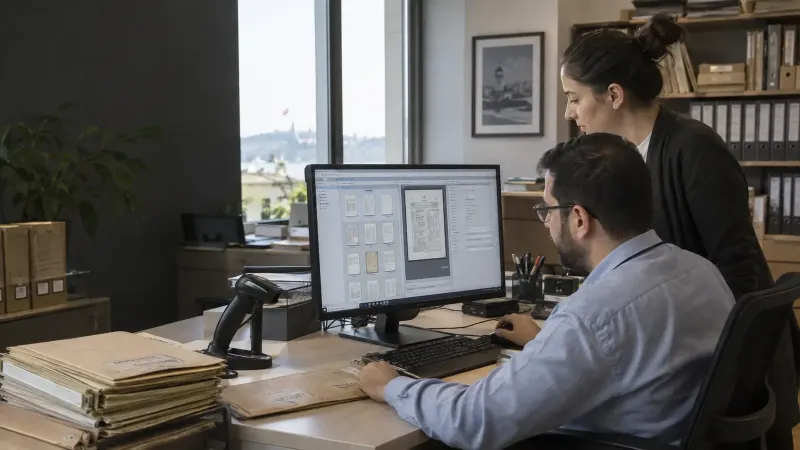
What is digital archive software? What to look for when choosing one
Digital archive software keeps scanned documents and the records of the physical archive in one place, making them searchable, access-con…
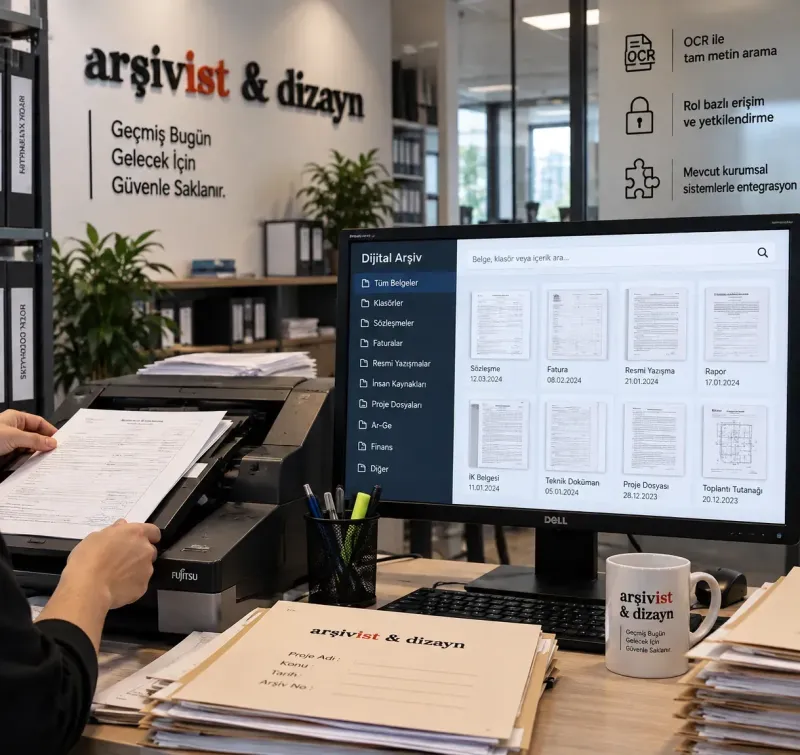
With a digital archive, your documents are at your fingertips in seconds
The digital archive systems we build with high-resolution scanning, OCR and accurate indexing turn your documents into secure, searchable…