



RESTORASYON REHBERI
What is Japanese tissue paper? Its use in paper restoration and choosing the right weight
Japanese tissue paper (washi) is a thin but very strong paper made from the long fibres of the kozo, mitsumata or gampi plants; in paper restoration it is used for tear repair, loss filling and reinforcement.
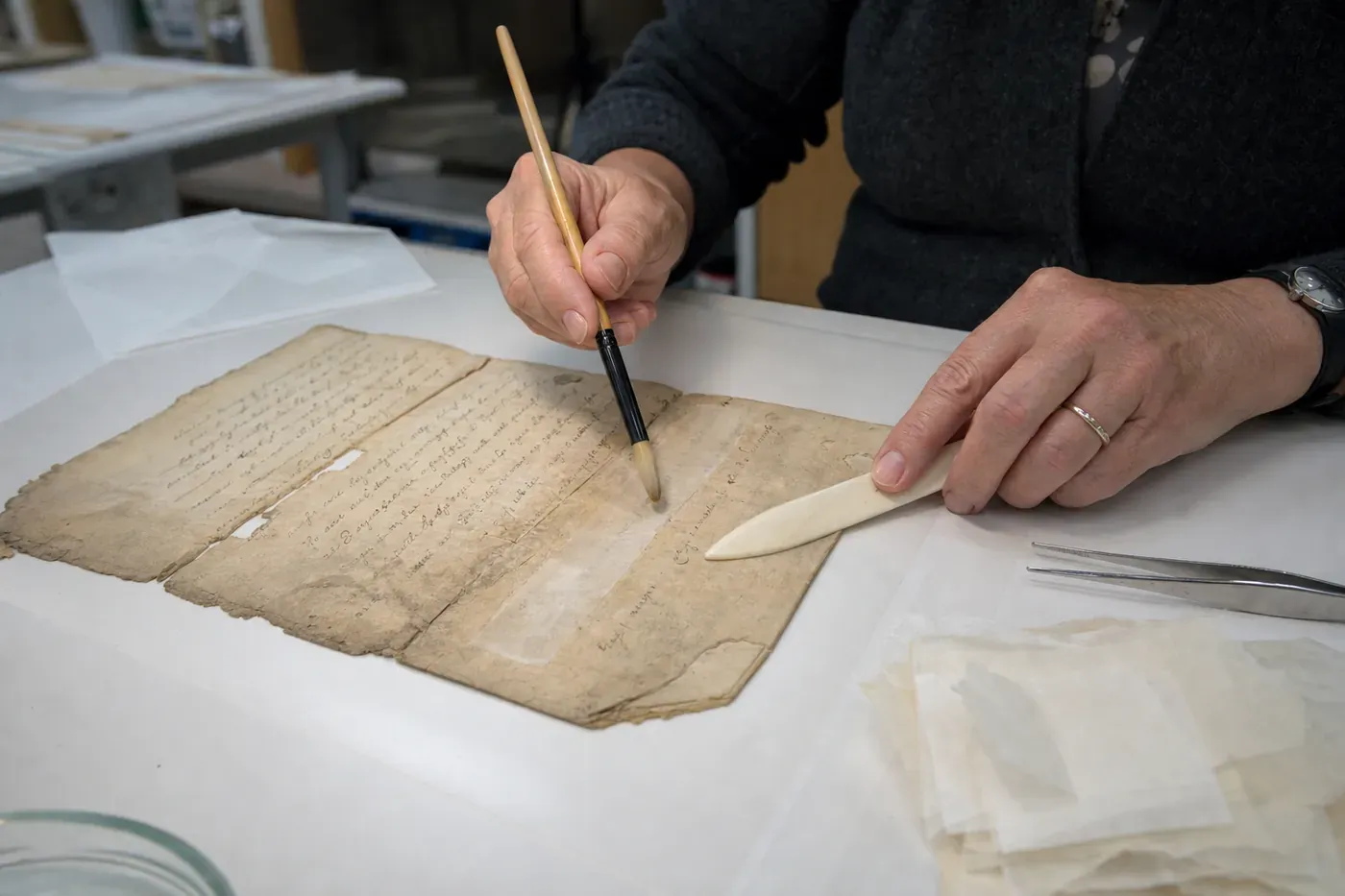
Japanese tissue paper (washi) is a paper made by hand or by machine from the long fibres of the kozo, mitsumata or gampi plants; although very thin, it is remarkably strong. Thanks to its long fibres it resists tearing even at low weights, which is why it is the most widely used material in paper and book restoration for repairing tears, filling losses and reinforcing weak pages.
Why is Japanese tissue paper preferred in restoration?
- Long fibres: even a narrow strip holds a tear together securely.
- Thinness and transparency: placed over text or an image, the thin weights do not impair legibility.
- Flexibility: it moves with the page, so the repaired area does not stiffen and crack.
- Reversibility: because it is applied with water-soluble adhesives such as wheat starch paste or methyl cellulose, the repair can be undone with moisture when needed.
What is the difference between kozo, mitsumata and gampi?
Kozo (paper mulberry) has the longest and strongest fibres and is the type most often used in restoration. Mitsumata gives a softer, silkier surface. Gampi produces thin, glossy, translucent papers. For a repair, the fibre type is chosen to match the texture and tone of the paper being repaired.
Which weight should I choose?
Weight (grammage) is the mass of the paper per square metre and is chosen according to the purpose of the repair:
- Very thin (below about 10 g/m²): tears running through text and surface reinforcement of fragile pages. Tengujo-type papers belong to this group.
- Thin to medium (about 10–25 g/m²): bridging page edges and folds, general tear repair.
- Heavy (about 25 g/m² and above): filling missing areas, binding hinges and spine reinforcement.
The general rule: the repair paper should be slightly thinner and weaker than the paper being repaired, so that if any strain occurs, it is the repair paper that gives, not the original document.
How do you cut and adhere Japanese tissue paper?
Repair strips are not cut with scissors; a line is drawn on the paper with a wet brush or pen and the paper is torn along the fibres. This leaves a fine fringe of fibres at the edge, so the repair blends softly into the document. Wheat starch paste or methyl cellulose is used as the adhesive, and the repair is dried between blotting papers under a light weight. We explain how to prepare methyl cellulose in our methyl cellulose guide.
Tengu papers
Arşivist & Dizayn is the Türkiye distributor of Tengu papers by the Japanese manufacturer Hidakawashi. The Tengu series offers weights for different repair needs: 7.3 g/m² Regular, 18 g/m² and 24 g/m² Naturel Shade, 34 g/m² Naturel Shade and chlorine-free options. For details, see our Tengu page and our article on paper restoration with Tengu.
Where can I buy Japanese tissue paper?
You can find all the Japanese papers used in restoration in our Japanese paper category, for example Tengu Regular 7.3 g and Tengu Naturel Shade 18 g. For adhesives, Aytex-P wheat starch and methyl cellulose are the most common choices. For badly damaged documents, our conservation and restoration service can help.
Related posts
What is methyl cellulose? Its use in paper restoration and how to prepare it
Methyl cellulose is a water-soluble cellulose ether derived from cellulose; in paper and book restoration it is used as a reversible adhe…
What is ahar paper? How is it made and where is it used?
Ahar paper is paper coated with ahar, a sizing made from ingredients such as starch, egg white and alum, and burnished with a mühre; in c…